
Il faut jouer
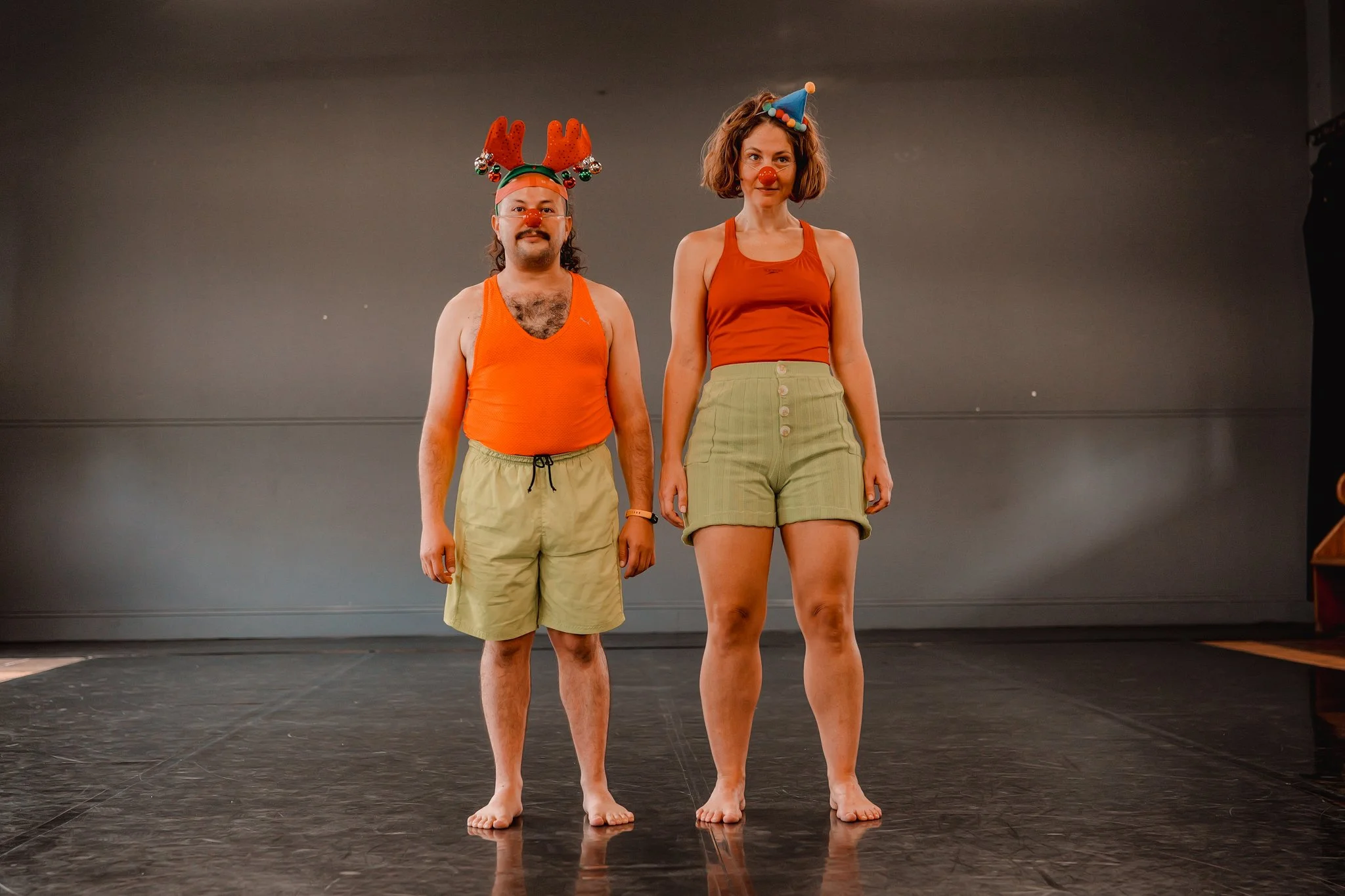
There’s a mischievous little sentence hiding in the French language: “Il faut jouer.”
Literally: one must play.
Not you should play if you feel like it.
Not play when you are ready.
Not play once you’ve rehearsed enough to deserve it.
Play is not optional.
It’s a requirement.
When I was training at the L'École Internationale de Théâtre Jacques Lecoq in Paris, that phrase floated through the studio like oxygen. Sometimes spoken by teachers. Sometimes muttered by students. Sometimes shouted when someone froze on stage like a deer caught in the headlights of their own self-consciousness.
Il faut jouer.
You must play.
Not because it’s cute.
Because without play, nothing happens.
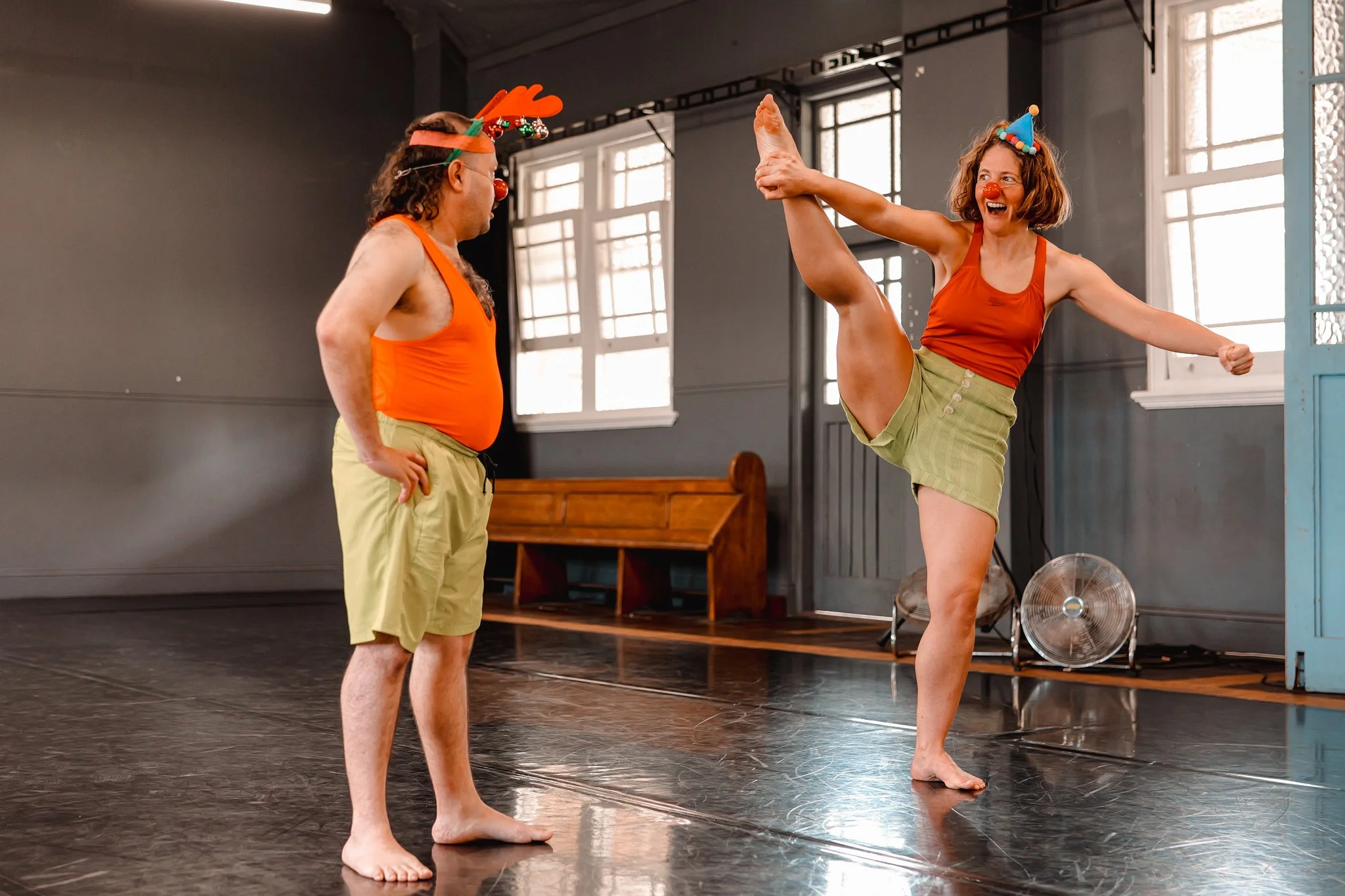
The game is the engine
In last month’s Playground class in Sydney we explored something Lecoq training circles around constantly: le jeu.
The game.
Clown teachers say this phrase constantly: “Find the game.”
Students nod like they understand.
Half the room secretly doesn’t.
Here’s the strange thing about “the game.”
It isn’t a script.
It isn’t a clever idea.
It isn’t even necessarily funny.
The game is the invisible engine of the scene.
Something simple begins to repeat.
A rhythm appears.
A rule emerges.
Suddenly the audience understands what’s happening.
Now the clown can play with it.
Break it.
Push it.
Stretch it.
If someone puts a hat on, takes it off, puts it on again, and the audience starts laughing… congratulations.
You’ve discovered a game.
Now the question becomes: how far can you go with it before the universe collapses?
The enemy of the game
Here’s the paradox.
Finding the game is not hard.
Allowing it to exist is hard.
Humans are very talented at killing games the moment they appear.
A clown takes off a shoe.
The audience laughs.
Instead of continuing, the performer thinks:
Ah. They liked that. I should now do something clever.
And just like that, the game dies a quiet theatrical death.
Clowning reveals a brutal truth about human behaviour: we abandon the thing that works in search of the thing that proves we are intelligent.
The clown is asked to do the opposite.
Stay stupid.
Stay curious.
Stay inside the game.
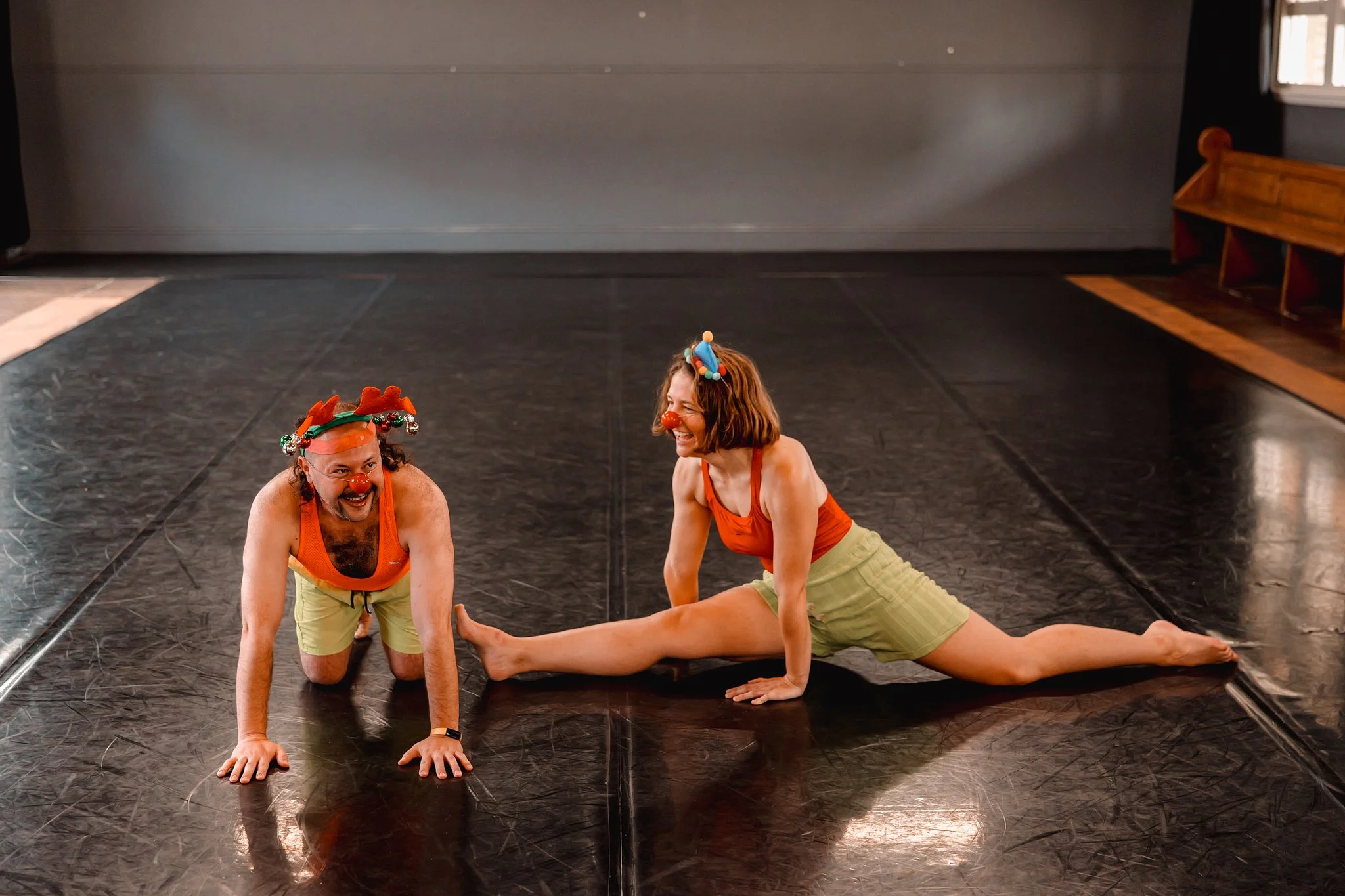
Play is not frivolous
The phrase “Il faut jouer” has a slightly authoritarian flavour in French.
It’s almost like a law of physics.
You must play.
Because play is how discovery happens.
Children do this effortlessly.
Clowns do it publicly and with slightly more trousers falling down.
Play creates experiments.
Try something.
Notice the reaction.
Repeat or change the rule.
The audience is your friend
Another strange thing about the game.
The audience often sees it before the performer does.
You feel the laugh.
You sense a shift in the room.
Something is alive.
The audience is basically whispering: “Yes. That. Keep doing that.”
A clown who listens becomes part of a shared invention happening live in the room.
No two performances are the same because the game is always slightly different.
Haha, sounds like torture, doesn’t it?
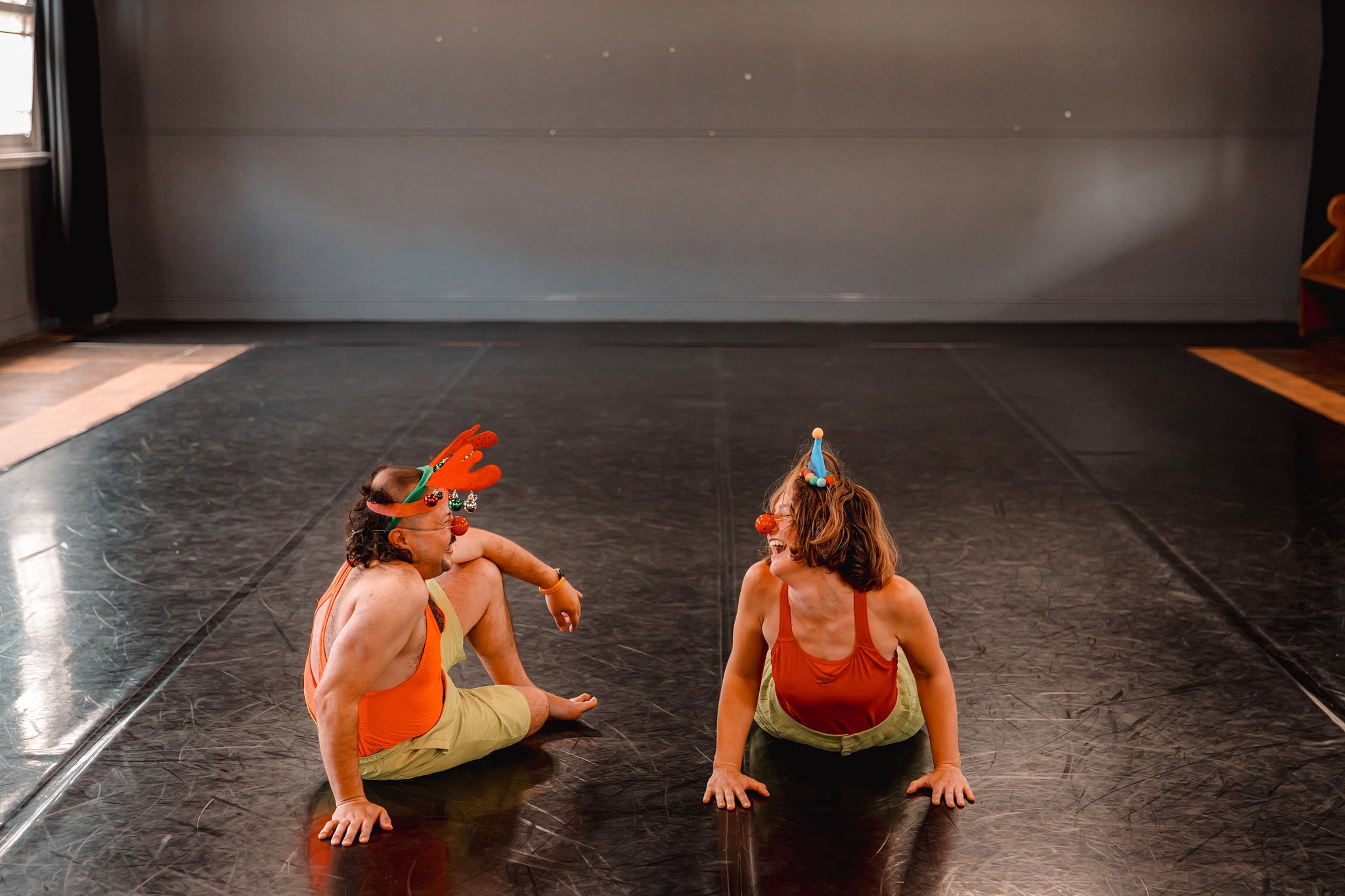
The game of being human
Clowning reveals something uncomfortable.
Humans are always playing games.
Social games.
Status games.
Romantic games.
Power games.
The clown simply makes these games visible.
Suddenly we see the rules.
The desire to be loved.
The need to win.
The fear of looking foolish.
The clown tries everything and fails magnificently.
And the audience laughs because they recognise the game.
It’s the same one they’ve been playing all week.
70 years later..
This year marks the 70th anniversary of the L'École Internationale de Théâtre Jacques Lecoq.
When they asked alumni to share what stayed with them most from training, my answer came immediately.
Not a technique.
Not a mask.
Not a theory.
Just that small French sentence.
Il faut jouer.
You must play.
Not someday.
Now.
Because somewhere in the room, a game is waiting to be discovered.
And the audience already suspects what it might be.