
What are we still afraid to laugh at?
A few weeks ago I watched Funny AF on Netflix.
I laughed. The performers were sharp, skilled and charismatic. The jokes landed. The audience roared. Everyone appeared to be having a very good time.
Then, somewhere between the final credits and brushing my teeth, I found myself thinking about bouffon.
Which is probably not the response Kevin Hart was hoping for.
The thought lingered. It led me back to a question that has followed me ever since I studied at Jacques Lecoq's school in Paris more than a decade ago.
What is the job of the artist now?
The question returned again during a Bouffon Lab I ran in March. For five days we explored grotesque bodies, childhood games, rituals, mockery, parody and power. Participants became prophets, politicians, pests, predators and peculiar creatures. They formed gangs. They denounced institutions. They invented impossible worlds.
Yet underneath all the exercises and improvisations, another conversation was quietly unfolding. A conversation about artistic danger.
The word danger gets thrown around a lot in theatre. People talk about provocative work. Political work. Boundary-pushing work. But I find myself wondering whether danger has less to do with subject matter and more to do with uncertainty.
The genuinely dangerous artist doesn't always know where they are heading. Neither does the audience. Both are entering unfamiliar territory.
Increasingly, I notice artists gathering in circles of agreement. Comedy has them. Theatre has them. Clown has them. Bouffon has them.
People find their tribe, identify the villains, agree on the diagnosis and spend the evening applauding one another's conclusions.
The room feels righteous. The room feels united. The room rarely feels dangerous.
I notice this especially in workshop rooms. Bouffon rooms. Clown rooms. Rooms full of artists who often share the same politics, the same references, the same suspicions, the same language around power. Everyone knows which targets are acceptable. Everyone knows which opinions will be rewarded. Everyone knows where the laugh is supposed to land.
This can make the work feel bold while being strangely obedient.
The bodies become grotesque, but the thinking remains familiar. The costumes get wilder, but the point of view gets narrower. Everyone starts mocking the same people, in the same tone, with the same righteous heat. The room calls it danger, but sometimes it is only recognition. A ritual of agreement dressed up in a hump.
Community matters. Belonging matters. Artists need places to gather. But something strange happens when agreement becomes the destination. Curiosity begins to shrink. Questions become answers. Exploration becomes confirmation. The work starts to know exactly where it is going before it begins.
And that's where I find myself drifting back towards bouffon.
“The room feels righteous. The room feels united. The room rarely feels dangerous.”
The bouffon has always fascinated me because it occupies an awkward position. It lingers at the edge of the village. It peers through the window. It watches the rituals, the rules, the fashions, the fears and the hypocrisies. Then it begins to play.
The bouffon notices what everybody else has stopped noticing. The blind spot. The contradiction. The sacred cow grazing peacefully in the middle of the room.
Historically, bouffon exposed power. Kings. Priests. Politicians. The wealthy. The respectable. The mighty.
But satire does not automatically threaten power.
Sometimes satire gives power another stage. It turns the powerful into characters. It makes their cruelty theatrical, their stupidity entertaining, their absurdity repeatable. The audience gets the pleasure of recognition. We point, laugh, groan and feel awake. Then the machinery keeps moving.
This is one of the traps of political comedy. It can become a pressure valve. It releases disgust without changing the conditions that produced it. The villain has been named, the room has agreed, the artist has been applauded, and power absorbs another little performance of resistance.
In that sense, satire can end up propping up the very thing it claims to attack. The king survives the mockery. Worse, the king learns to enjoy it. He becomes part of the joke, part of the brand, part of the spectacle.
The bouffon may mock the palace, but the palace has many rooms. Sometimes satire is one of them.
So, somewhere along the way another question emerged for me. What happens when the absurdity is already visible?
Politicians have become parodies of politicians. Influencers manufacture authenticity at industrial scale. Billionaires sermonise from private rockets. Artificial intelligence invents facts with complete confidence. The satirical sketch often arrives after the headline. The grotesque no longer hides in the shadows. It arrives before breakfast and lives in your pocket.
The world has become more bouffon than the bouffon.
And if the world is already grotesque, imitation is not enough.
A bigger politician, an uglier billionaire, a louder influencer, a more monstrous institution: these images may be accurate, but accuracy is not the same as revelation. The audience already knows these figures are absurd. They have seen the meme before. They have laughed at the headline before and performed their disgust before.
So the artist has to ask a more difficult question: what is this spectacle hiding? What does our laughter protect? Where are we being invited to feel superior, while remaining comfortably untouched?
That question surfaced repeatedly throughout the March lab. We spent time mocking. Parodying. Exaggerating. Playing. Yet I found myself becoming increasingly interested in another territory altogether.
Nightmare. The kind that feels plausible and that arrives disguised as progress.
Humans outsourcing intimacy to algorithms. A room full of artists applauding each other's courage. A society optimising itself into oblivion.
The creatures inhabiting these worlds weren't suffering. They adored their reality. They celebrated it. They sold it to us with evangelical enthusiasm.
And something interesting happened. The laughter changed. It became thinner. Sharper. The audience wasn't laughing at somebody else's stupidity. They were laughing at a future they recognised.
“A ritual of agreement dressed up in a hump.”
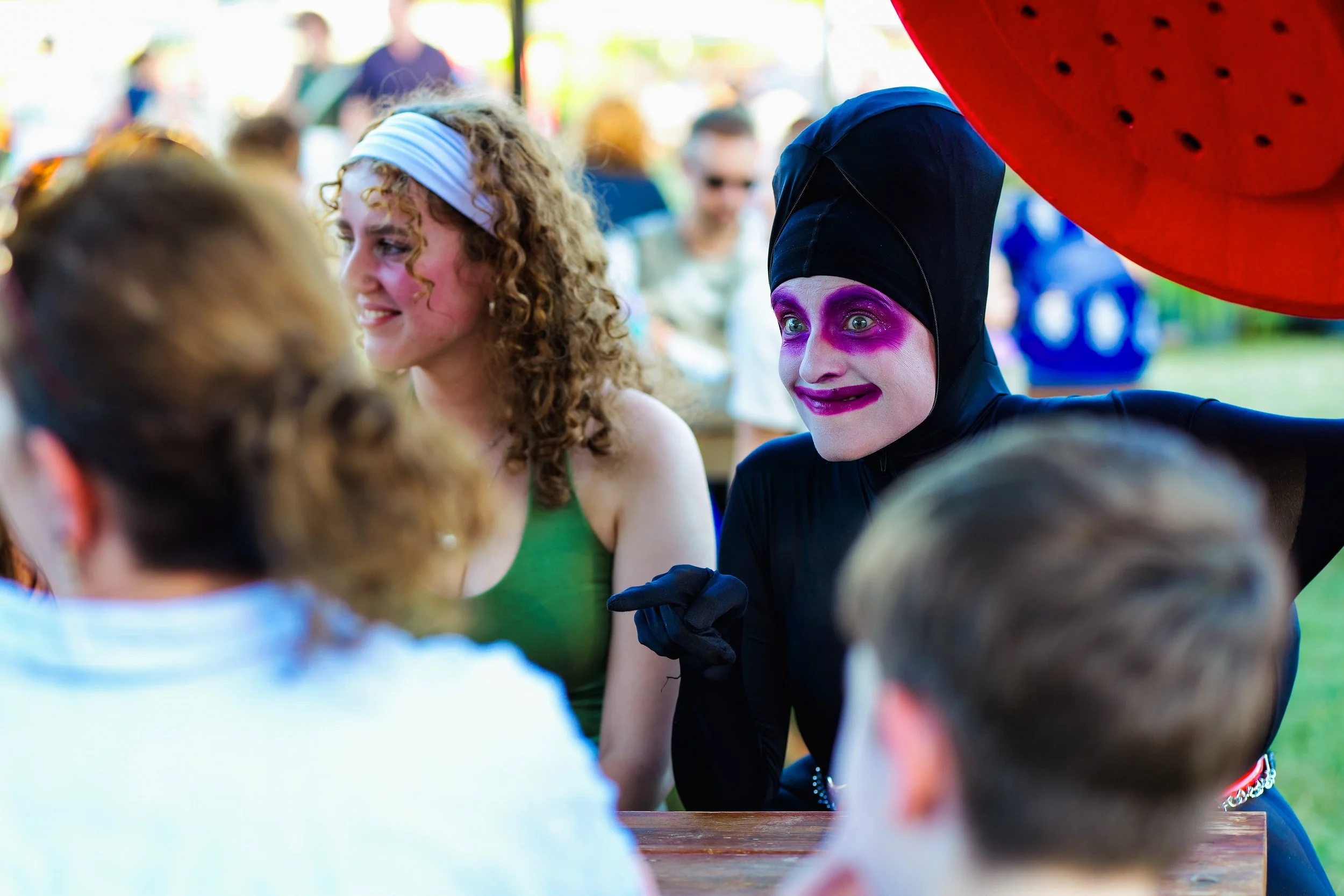
Perhaps that is where my curiosity now lives. Less in satire and more in revelation. Less in certainty and more in questions.
Artists like Michael Leunig have always interested me for this reason. While public attention rushed in one direction, he often wandered somewhere else entirely. Towards loneliness. Towards tenderness. Towards childhood. Towards the small absurdities of ordinary life.
He seemed drawn towards whatever had escaped the spotlight.
That feels increasingly important. Because the spotlight today is crowded. Everyone is looking at the same things. Arguing about the same things. Laughing at the same things. Outraged by the same things.
The artist may have another task. To wander off the path. To notice what everybody else has walked past. To ask the awkward question. To reveal the thing hiding beneath the joke.
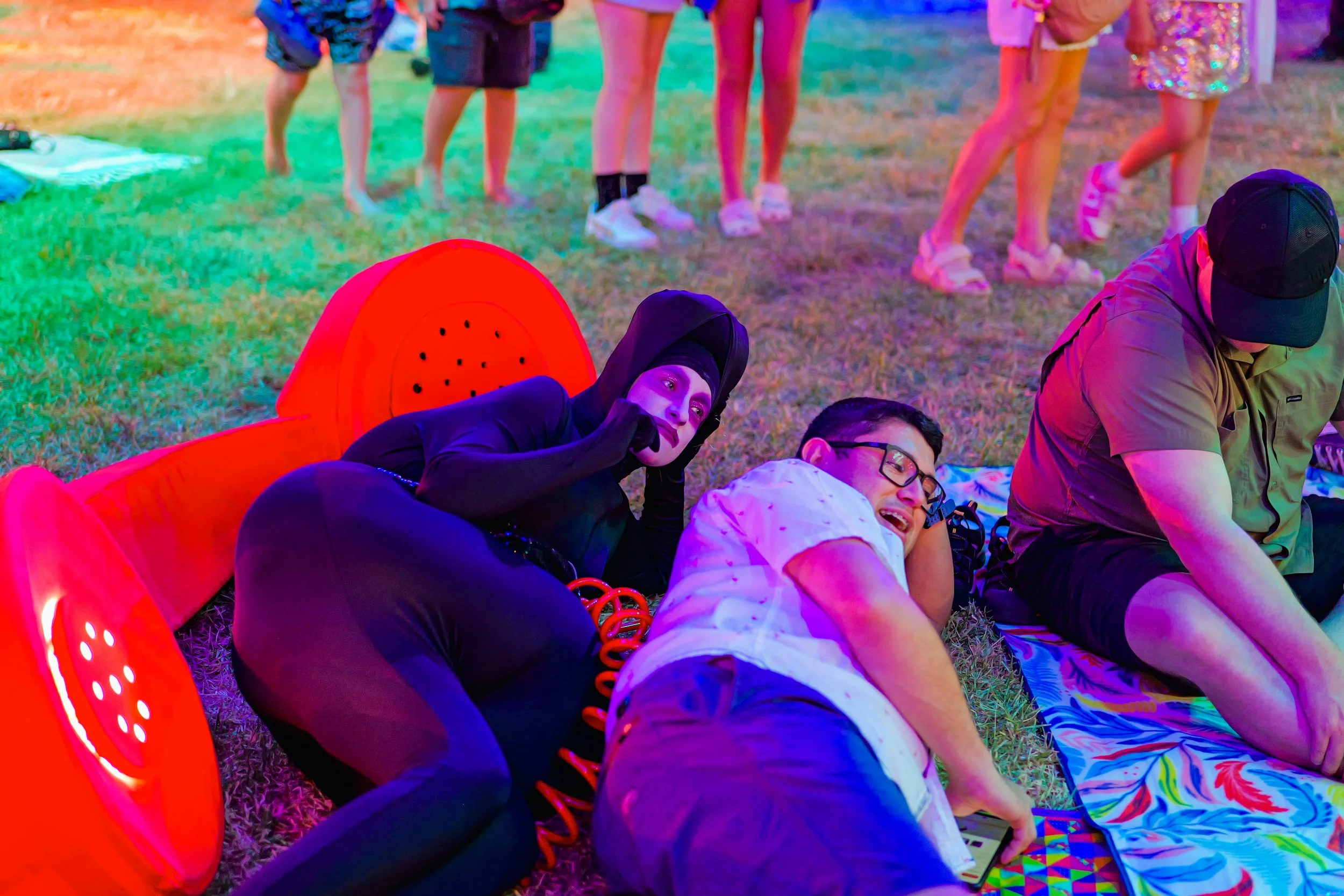
So where does the artist look now?
I suspect the first place is away from the applause.
That sounds simple, but it is harder than it looks. Applause is warm. Agreement is seductive. There is a little ego biscuit in being understood by the room. You say the thing everyone already believes and the room rewards you for it. The laugh comes quickly. The nods arrive. The artist feels brave, while staying safely inside the village.
But the artist has to leave the village sometimes.
Make small things. Strange things. Unfunded things. Things made in rooms without a grant outcome, strategic priority, community engagement metric or neat little sentence explaining why the work matters.
This does not mean making work without form. The impulse needs a body. The danger needs discipline. In my own practice, clowning and bouffon offer that structure. They give the chaos a home. A performer can follow the impulse, but the impulse is held by rhythm, relationship, repetition, timing, mask, complicité and the audience. The work can be wild without becoming vague. It can be uncensored without becoming lazy. It can be dangerous without simply spraying discomfort around the room and calling it art.
Perhaps the artist begins by asking a few less convenient questions.
Where am I mistaking agreement for courage?
Is my target too easy?
Who benefits from this joke staying exactly where it is?
Am I exposing power, or giving it a more entertaining costume?
What part of the monster belongs to me?
What would I make if I knew the room would not immediately approve?
Where am I hoping the audience will agree with me?
What image keeps returning, even though I don’t understand it yet?
That last one interests me most. The image that will not leave. The impulse that keeps knocking. The ugly little thought at the edge of the rehearsal room. The dream, the disgust, the forbidden laugh, the private fear, the thing that will probably never make sense inside a funding application.
That might be where the work begins.
Dangerous comic work doesn’t have to begin with an opinion. It may begin by distrusting the first opinion that arrives. Especially the opinion that makes the room nod too quickly.
In bouffon, the first target is often too obvious. The politician. The billionaire. The institution. These figures may deserve mockery, but if the room already agrees, the artist has to keep digging. Beneath the target is usually a system. Beneath the system is a desire. Beneath the desire is a fear. Somewhere in there, the audience may begin to recognise itself.
It can begin with an itch. A body. A contradiction. A fantasy. A fear. A tiny grotesque seed that grows teeth in the dark.
Then the artist gives it form.
Research the world behind it. Find the facts, not just the feeling. Put it in the body. Give it a rhythm. Let it meet an audience. Notice where they laugh too easily. Notice where they stop laughing. Notice where the silence changes temperature. Follow that. The silence often knows more than the applause.
Bouffon is useful because it does not let the artist remain innocent for long. If it only points outward, it becomes preaching with a better silhouette. If it only confirms the politics of the room, it becomes theatre for people who already know where to clap.
The form asks for something more uncomfortable. It asks the artist to stand at the edge of the village and look back at the village, including the artistic village, the progressive village, the clever village, the village that thinks it is already awake.
That is where the real danger may be now. Not in saying the approved outrageous thing, but in finding the contradiction the room would rather keep hidden.
Maybe this is where bouffon still has something to teach us.
It reminds us that the artist is not here merely to entertain the tribe, flatter the tribe, or keep the tribe clapping in time. The artist is here to wander a little further out. To return with something odd in their hands. Something half-formed, half-lit, difficult to explain.
Something that makes the room laugh before it knows why.
“The bouffon notices what everybody else has stopped noticing.”
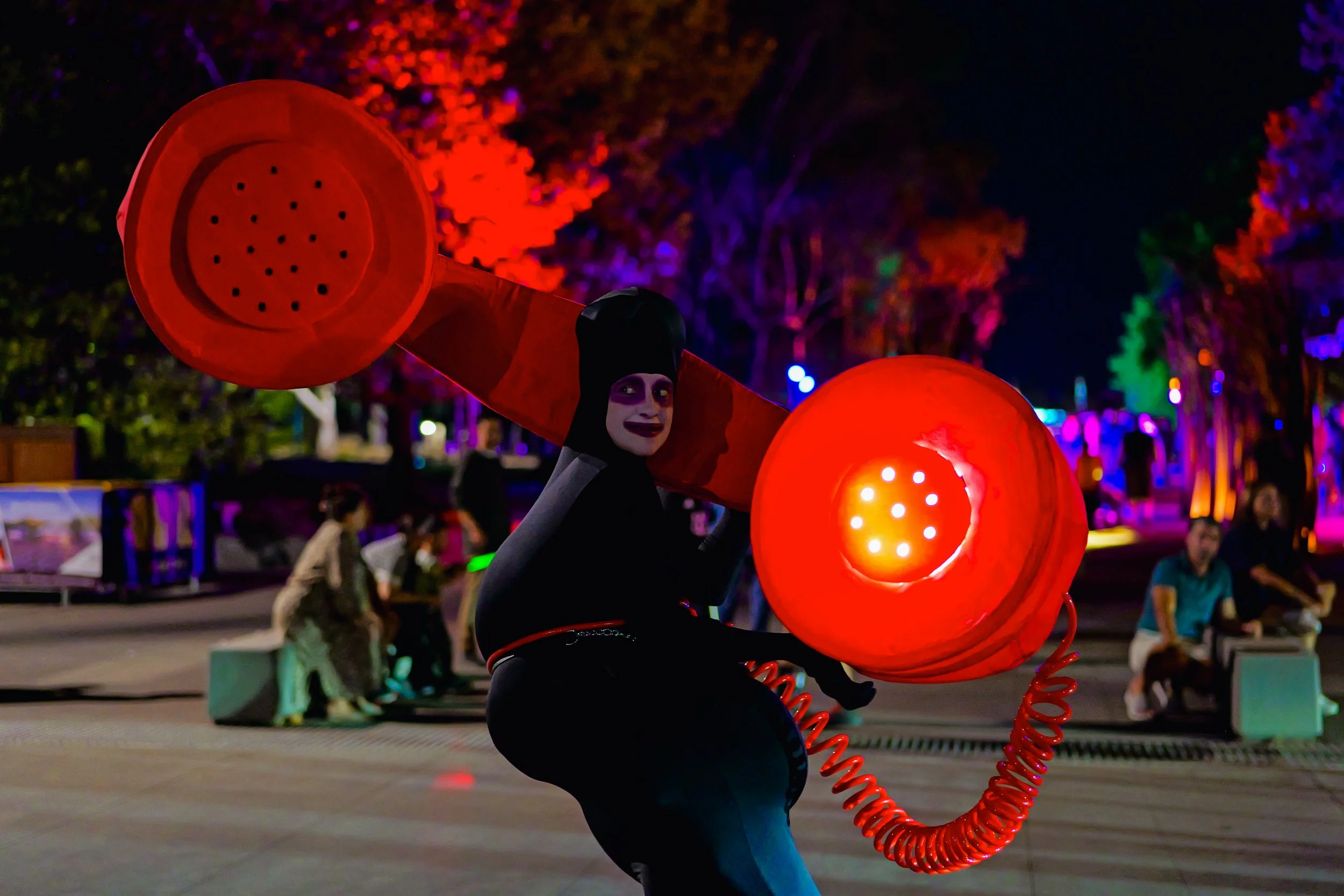
The March Bouffon Lab left me with more questions than answers. For me, that is usually a sign that something worthwhile has happened.
So I find myself returning to the question that first arrived while watching comedy on a Tuesday night.
What is the job of the artist now?
If every tribe already has its comedians, commentators and prophets, if satire itself has become predictable, if the absurdity is already visible, where should the artist look?
And what are we still afraid to laugh at?