
When the fool says no
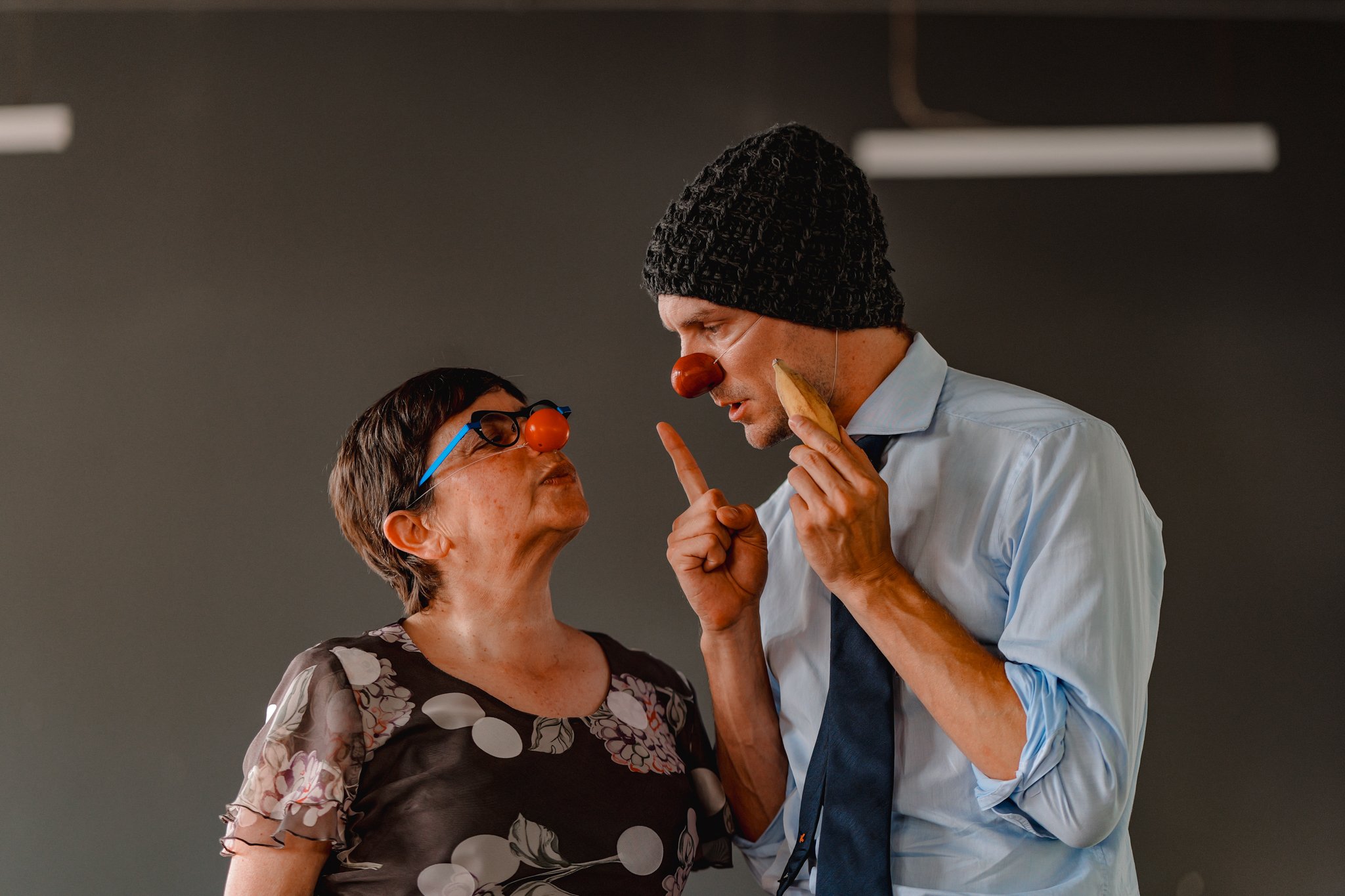
Sometimes a clown class is full of laughter. Sometimes it’s full of silence. Both are necessary.
This piece is about one of those quieter days. The kind that sends you home thinking about your life choices while eating toast.
There are days in the studio when everything flows. Laughter spills out. Bodies open. We tumble together into the strange joy of being human.
And then there are the other days.
The ones that stop you mid-breath.
This one stopped me.
A clown participant stood on stage mid-exercise. I guided, as we often must in this work. They resisted. I guided again, gently. The resistance thickened. Then hardened.
Something inside them shut down, and the laughter drained from the space.
We ended the exercise. The group was quiet.
I felt that quiet in my bones.
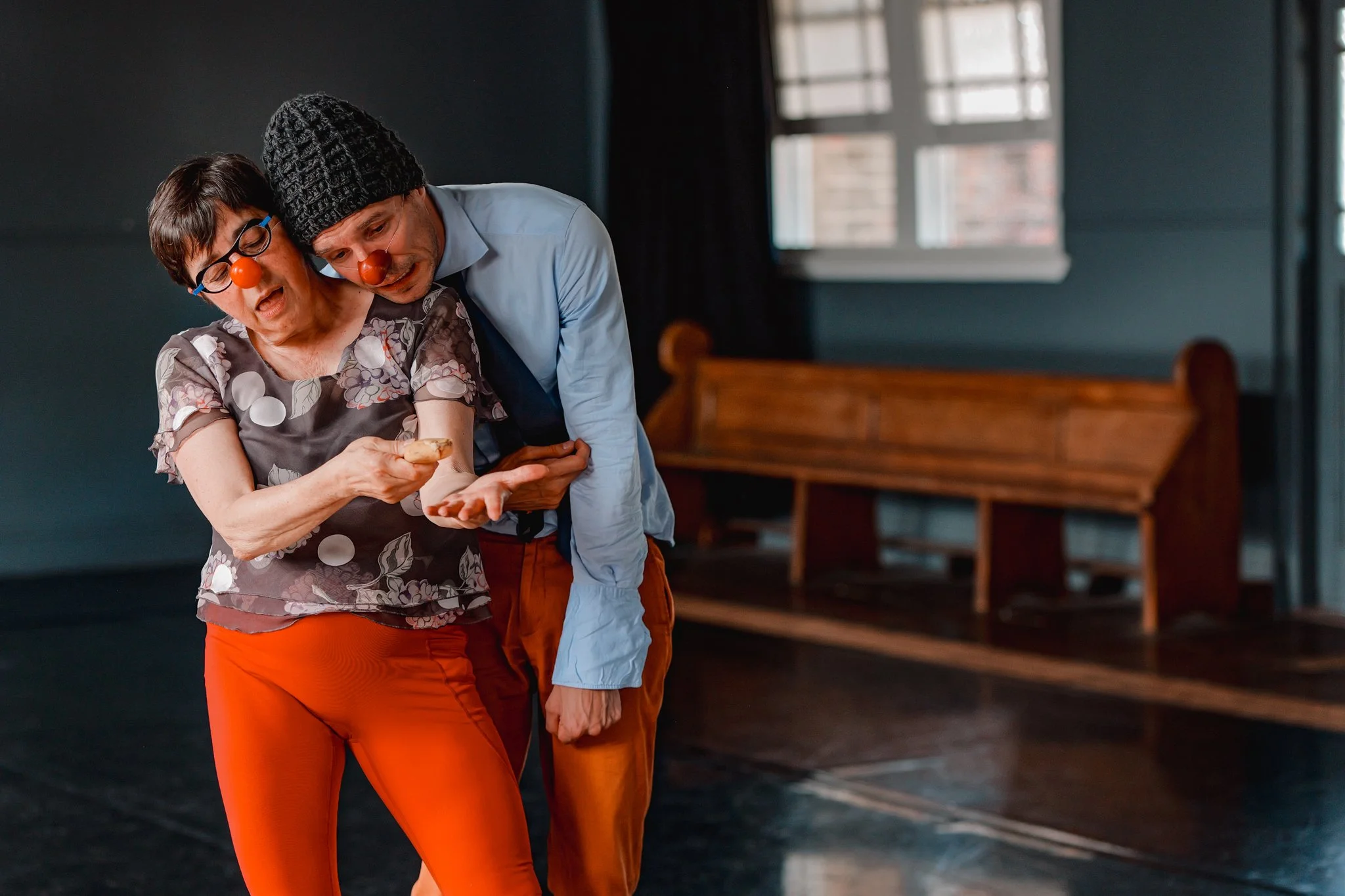
When no enters the room
Later, they wrote to me and said they understood what I was trying to do. That I was working with via negativa, the method of learning through removal. They wondered how we can ever know what someone can tolerate.
It’s a fair question.
Clowning is not comfortable art. It’s excavation. We dig through masks and habits and protective layers until something true, and often ridiculous, tumbles out.
A no is the body saying: not this way. Not today. Not at that speed.
In a practice built on truth, we have to respect that.
Even when it interrupts the arc.
Even when it ruins your neat little teaching moment.
Even when you were quietly hoping for the breakthrough that proves you know what you’re doing.
Clowning does not care about your branding.
Via negativa and removing the nonsense
Via negativa means “the negative way”. We remove rather than add.
We don’t build confidence first. We dismantle pretence.
We don’t aim to be funny. We let go of trying to be funny.
We don’t add tricks.
This sounds poetic. In practice, it can feel like realising that 40 percent of your personality has been posture.
And when the tricks fall away, what’s left can feel exposed.
The tremble.
The awkwardness.
Far more alive than anything you could perform. Also far more inconvenient.
Because shame hates emptiness.
Shame is a terrible life coach. It has one strategy: “Never do that again.” Unfortunately it applies this advice to everything, including joy.
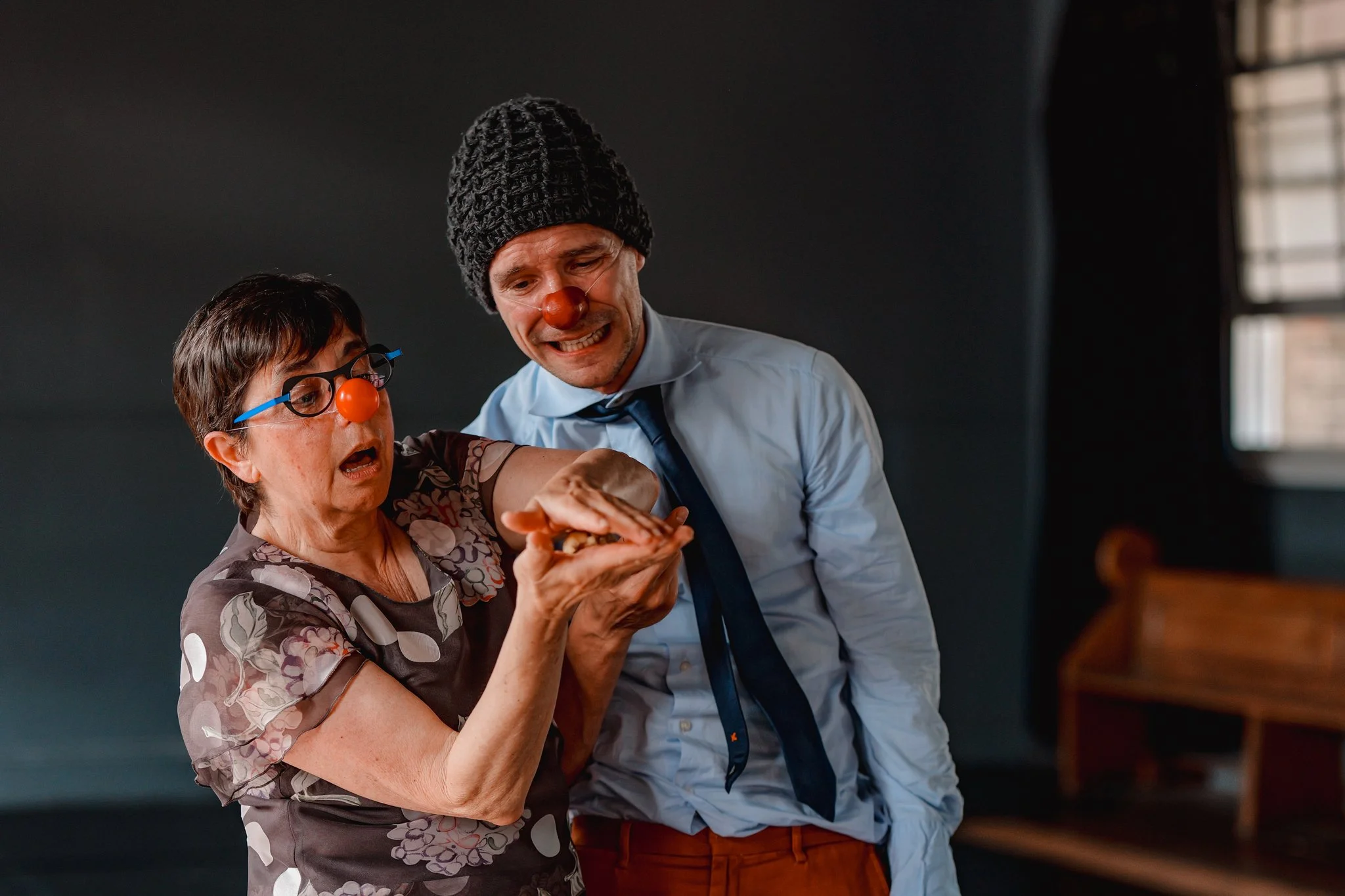
Rewilding the feral self
A teacher I admire speaks about rewilding. Let nature do what nature wants to do. Stop manicuring the soul.
I love that image.
But rewilding is not always cute.
It’s feral.
Sometimes it’s a laugh that won’t stop.
Sometimes it’s a cry that refuses to be tidied away.
Sometimes it’s someone discovering a sound in their body that surprises them.
And sometimes, the most feral thing in the room is a clear, steady no.
Not as rebellion.
As truth.
The line teachers walk
As teachers, we walk a fine line between provocation and harm.
Push too little, and the student stays safe but untouched.
Push too far, and something collapses.
After that class, I drove home heavy. I replayed the moment over and over.
Should I have stopped earlier?
Was I too firm?
Not firm enough?
Did I miss the signal?
Did I push past the signal?
And if I’m honest, part of my discomfort was that I wanted it to be a “good class”.
I wanted the laugh. The relief. The tidy arc.
When shame visits (and it will)
Shame will show up in this work.
It will whisper:
“You pushed too far.”
“You didn’t push far enough.”
“You should have known.”
“You should be better by now.”
Shame is very articulate.
Before you believe it, try this instead.
Stand up.
Yes, actually stand up.
Flap your arms like wings. Big, ridiculous, undignified wings. The kind that would get you gently escorted out of a board meeting.
And say, out loud:
“Fuck off, shame fairy.”
Not because you’re avoiding reflection.
But because shame thrives on stillness and secrecy.
The body breaks spells.
Movement interrupts the (mental) spiral.
Sometimes the most intelligent response to shame is not analysis.
It’s flapping.
It’s letting your face be wet if it needs to be wet.
No pre-wiping.
You can reflect later.
First, dislodge the fairy.
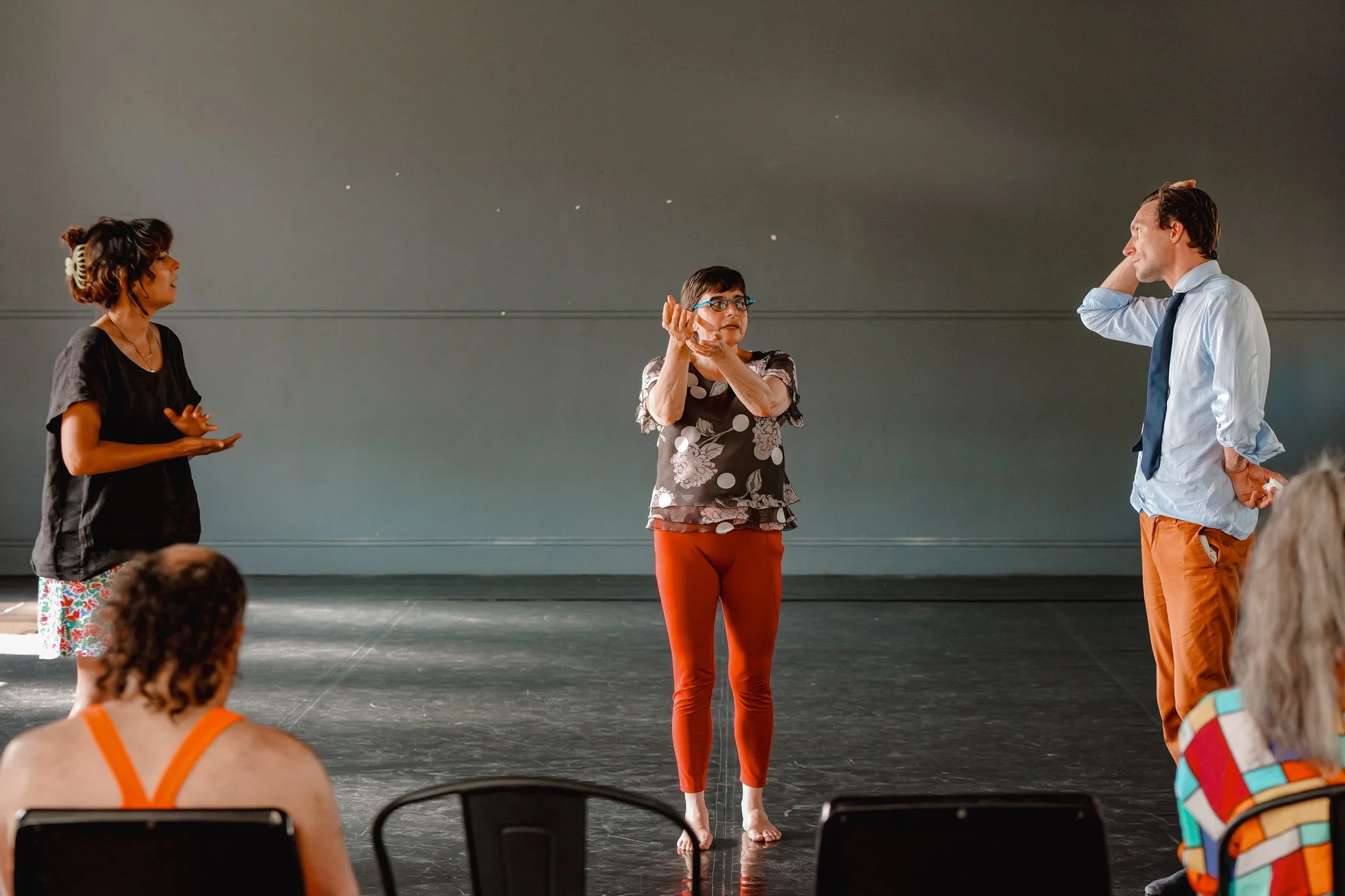
Silence is not failure
Clowning lives in uncertainty.
It’s not about control. It’s about surrender.
Sometimes that surrender feels like laughter.
Sometimes it feels like heartbreak.
Sometimes it feels like everyone staring at the floor while you question your pedagogy and your life path simultaneously.
Both are valid.
Both are holy.
The muscle that makes a laugh is the same muscle that makes a cry. If you clamp one down, you block the other.
So, what if the quiet day wasn’t a dead end?
What if the silence was the punchline.
Philosophy through play
Can you stay open when things don’t go to plan?
Because underneath the resistance, underneath the shame and the feral laughter, there is almost always a pulse.
The fool.
Waiting patiently to be seen again.
Not dragged.
Not humiliated.
Not forced into a breakthrough for the sake of a tidy narrative.
Invited.
Preferably with snacks.
And if the shame fairy tries to interfere, you know what to do.
Flap. Swear. Get back on that horse.